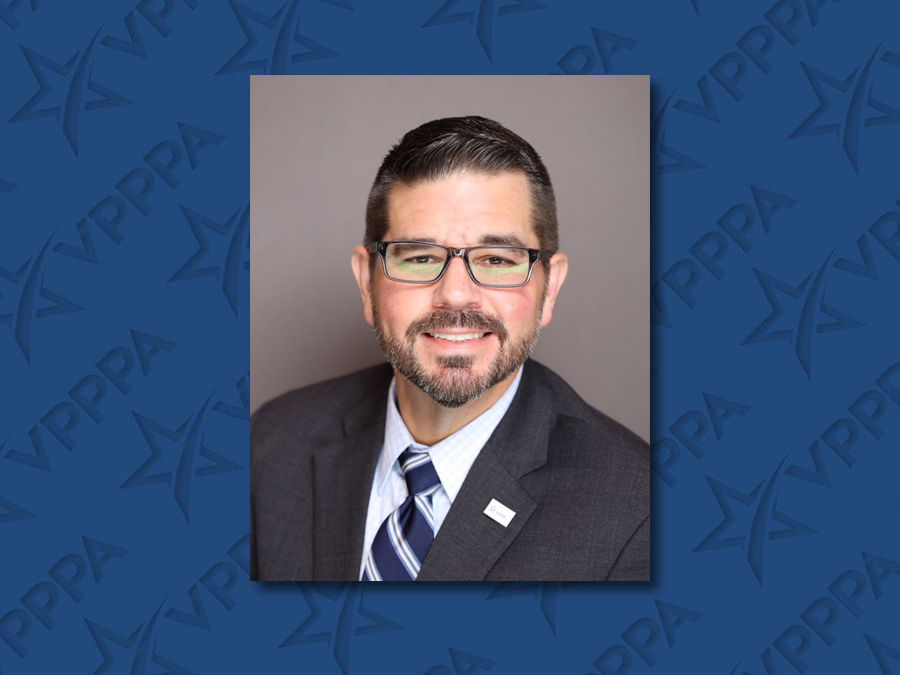
Contributor: Chris Williams – Executive Director, VPPPA
This past May marked the 77th observance of Mental Health Awareness month here in the United States. Established in 1949 by Mental Health America, this year’s theme centered on “More Good Days, Together” – encouraging all of us to, “…reflect on what a “good” day looks like, both for ourselves, and for our communities.”
According to the National Institute of Mental Health, more than one in five U.S. adults live with a mental illness. Nearly one in five children ages 3 to 17 have been diagnosed with a mental, emotional, or behavioral health condition, according to the U.S. Centers for Disease Control and Prevention. Chances are, you know a friend, family member or acquaintance who has struggled with mental health at some point in their lives.
And if you don’t, now you do, because I am one of those five adults.
Sharing our personal stories of mental health struggles can be incredibly difficult, especially for those of us, ahem, up there in age. But it shouldn’t be. Not when you consider that, on average, nearly 49,000 of our fellow Americans take their own lives due to their struggles. The CDC lists underlying mental health conditions as being strongly linked to suicide and, without an outlet for sharing and treatment, it’s easy to understand why.
Back in my day (again, up there in age), there was a stigma associated with mental health issues such as anxiety (check) and OCD (also check). We simply…kept them to ourselves. They were signs of weakness. Treatment options growing up were fairly limited to close family (you know, the “rub some dirt on it” generation) or your physician, who might—if you were lucky—refer you to a psychiatrist who would be more than happy to prescribe one of the few medications out there that kind of, sort of helped ease your mental strain. Even then, the stigma of seeing a mental health specialist could be crushing. So, I dealt with my issues the only way I knew how—bottle ‘em up and internalize.
It shouldn’t be that way. Thankfully, we’re making it so that it isn’t. Viva evolution.
My first awareness to both the problems (addiction, behavioral, suicide) caused by—and resources to treat them—came by way of the construction industry. Back in 2016, the Construction Financial Management Association banded together with other construction trade associations and labor organizations to found the Construction Industry Alliance for Suicide Prevention. CIASP began because of an alarming statistic—more than 5,000 construction workers take their own lives each year.
The construction industry recognized that, simply put, this was a problem and inaction wasn’t an option. CIASP created resources to help employers and employees recognize the signs of someone whose mental distress that lead to suicide. The Coalition worked with stakeholders to create an anonymous screening tool that helps those suffering with a mental health condition identify risk factors. More importantly, they provided a path—and resources—for employers to implement mental health and wellness plans, connect them with local and national resources for employees to seek help, and guidance on how to empower employees to be open about their struggles and seek help.
They made it ok to talk about mental health. More importantly, they made it part of our safety culture to ask for help. In short, CIASP helped save lives.
I’m proud to admit that I’m one of the thousands who found their courage and voice to take on my struggles. I see a therapist who helps me understand how to cope with my anxiety and OCD (still a work in progress, that one). I have friends who will gladly lend an ear and their time to let me open up about these struggles.
I am mentally healthy.
That’s why mental health awareness should be part of our safety cultures and programs. While the stigma of standing up and giving a voice to one’s struggles is significantly less in today’s world, it still exists. Our job is to treat mental health and its resulting issues (things like addiction and emotional outbursts) as what they truly are:
Something that every one of us experiences.
Only by including robust mental health resources for our employees to access—and being supportive of those who seek care—can we truly eliminate this stigma from a bygone era once and for all. Only by being open and honest as individuals, and admitting that we can’t tackle our struggles alone, can we become healthier workers, spouses, parents and friends.
At VPPPA’s 2026 Safety+ in Nashville this August, we’ll have resources available to help guide attendees in the right direction. It’s part of our mission to raise the standard for workplace safety excellence. More importantly, it might just save someone’s life.
It’s ok to not be ok. Together, we can have more good days. Take it from someone who knows.
If you or someone you know is suffering from mental health issues, or is thinking about suicide, call or text 988 any time for immediate crisis support. For more information, visit the National Alliance on Mental Illness at https://www.nami.org/.